

Retrieval practice / Retrieval Practice Grid: The Research Backs the Recall, Not the Grid
Retrieval grids are popular because they mix recall with spaced review, and both have strong evidence. No study we could find has tested the grid itself, so its details are design choices to make deliberately.

Careers / Instructional Design Jobs: Most Are Corporate. Here's How to Get Hired
In a study of 130 US job ads, six in ten instructional design roles were corporate and one in fifty was in a school. Here's where the work is, what employers ask for, and how to show you can do it.
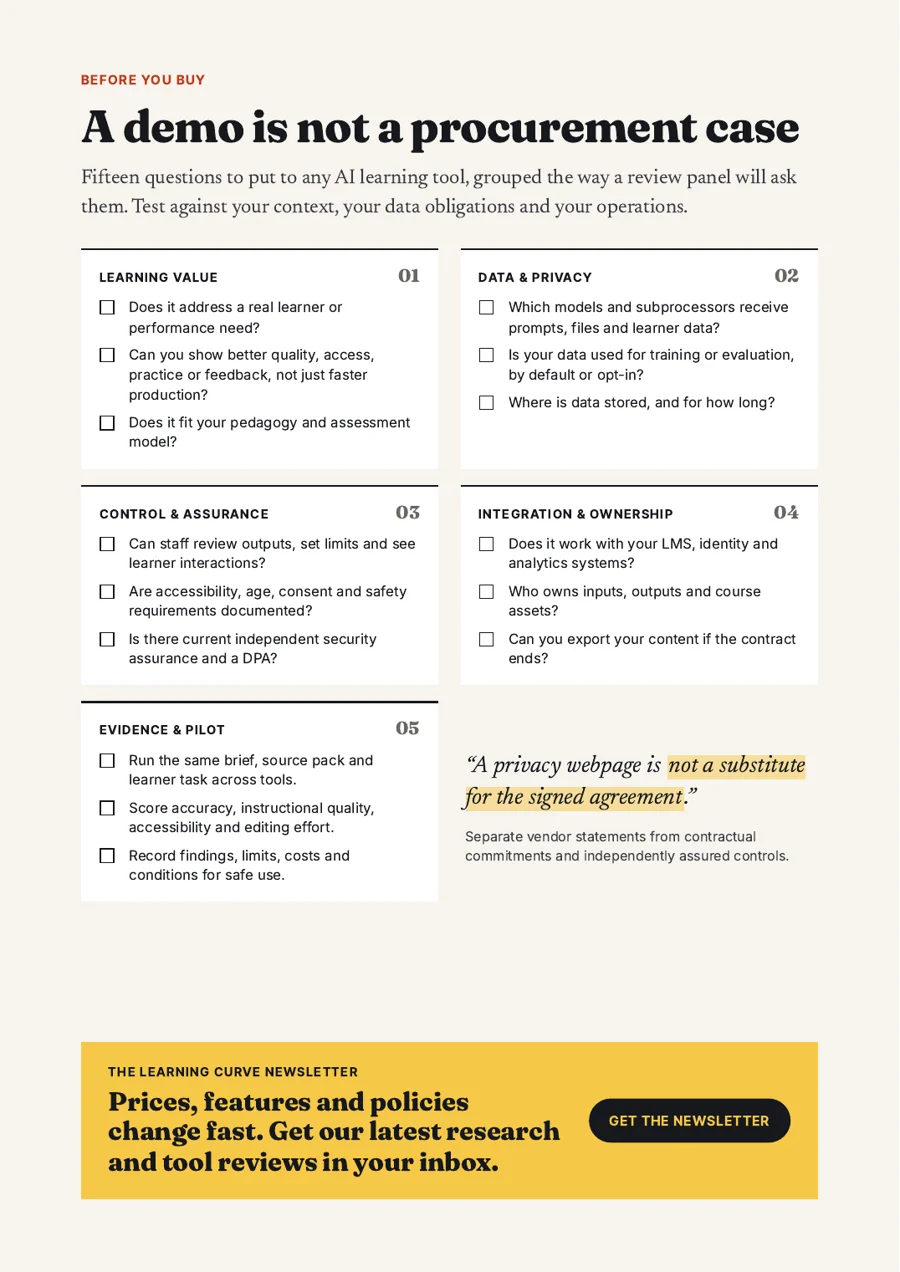
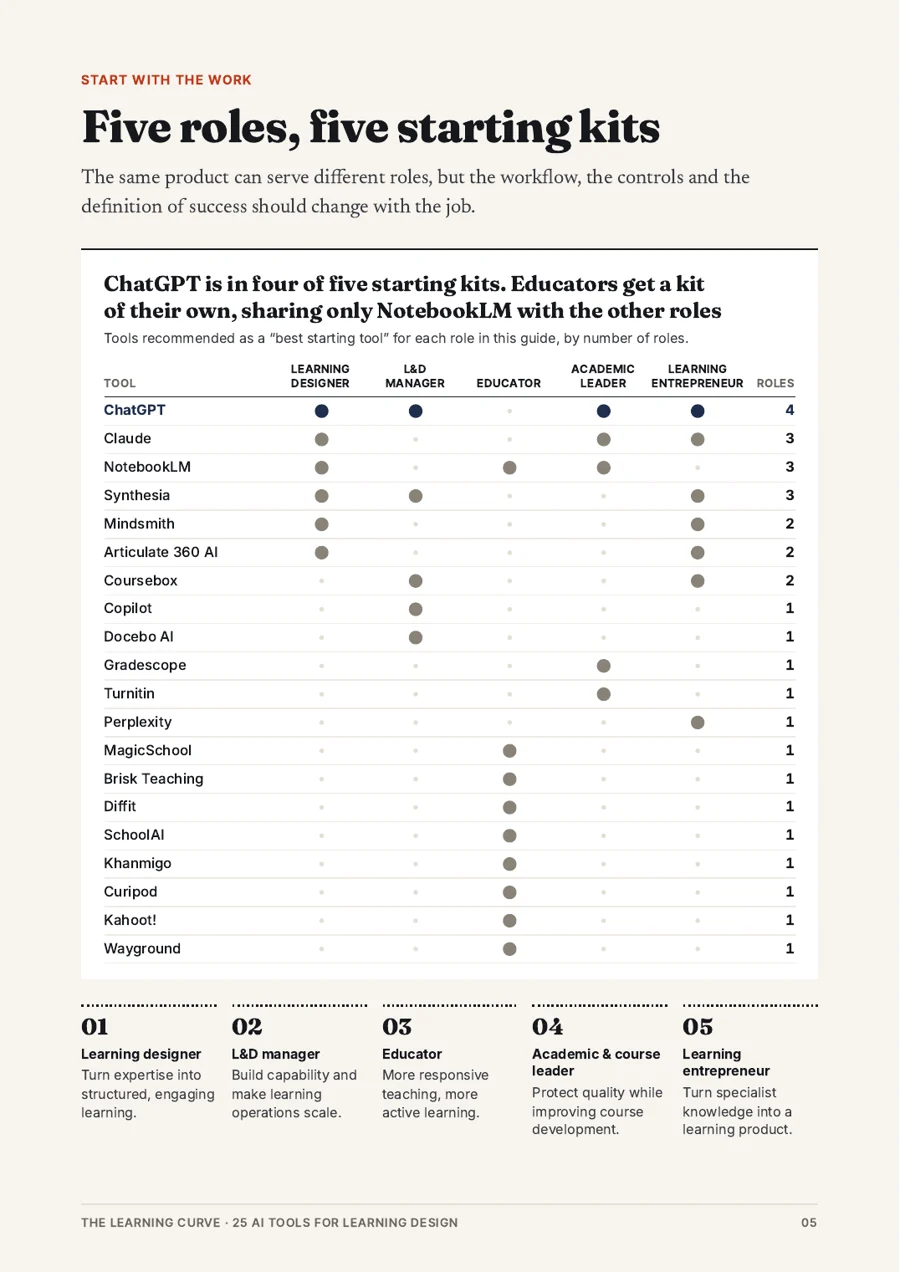
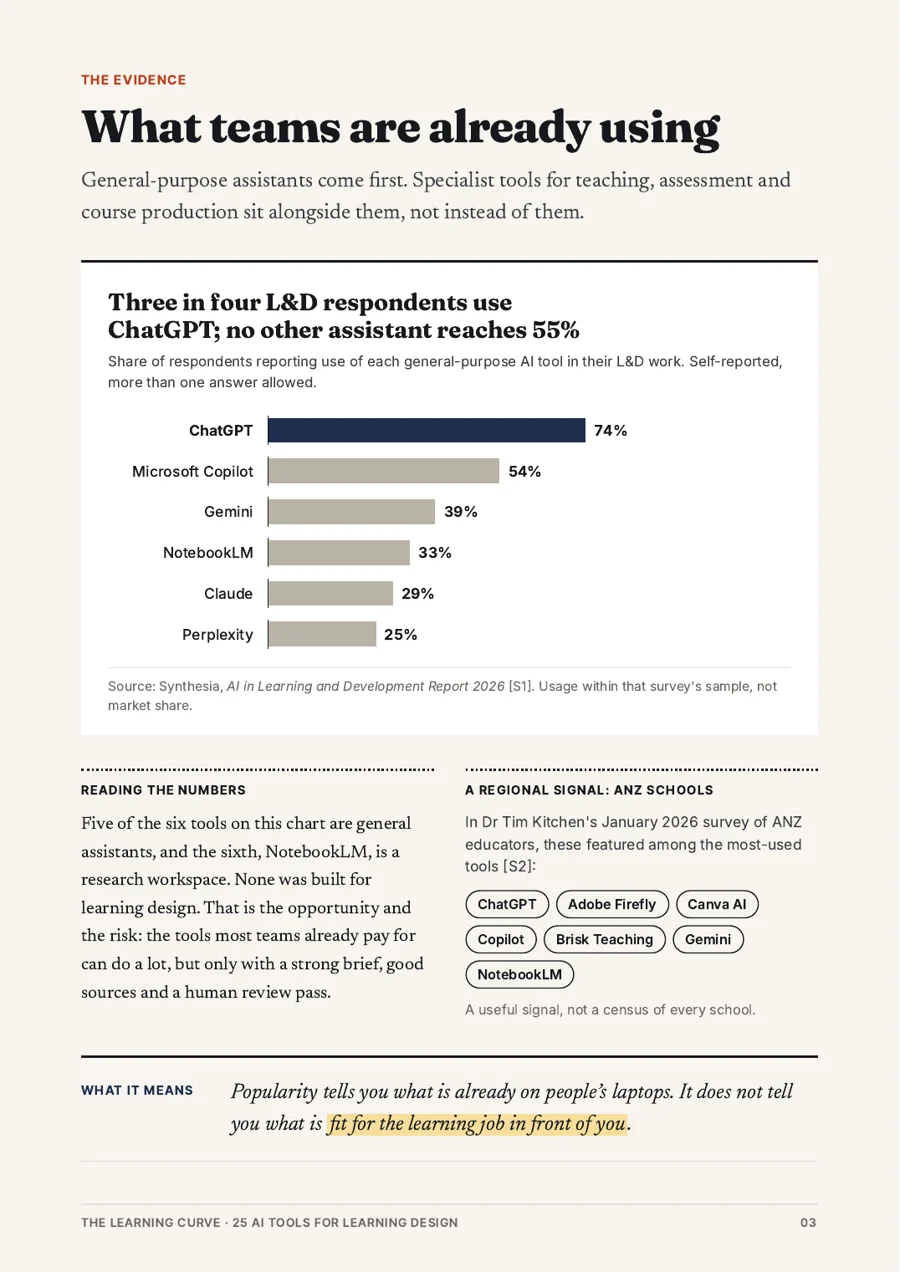
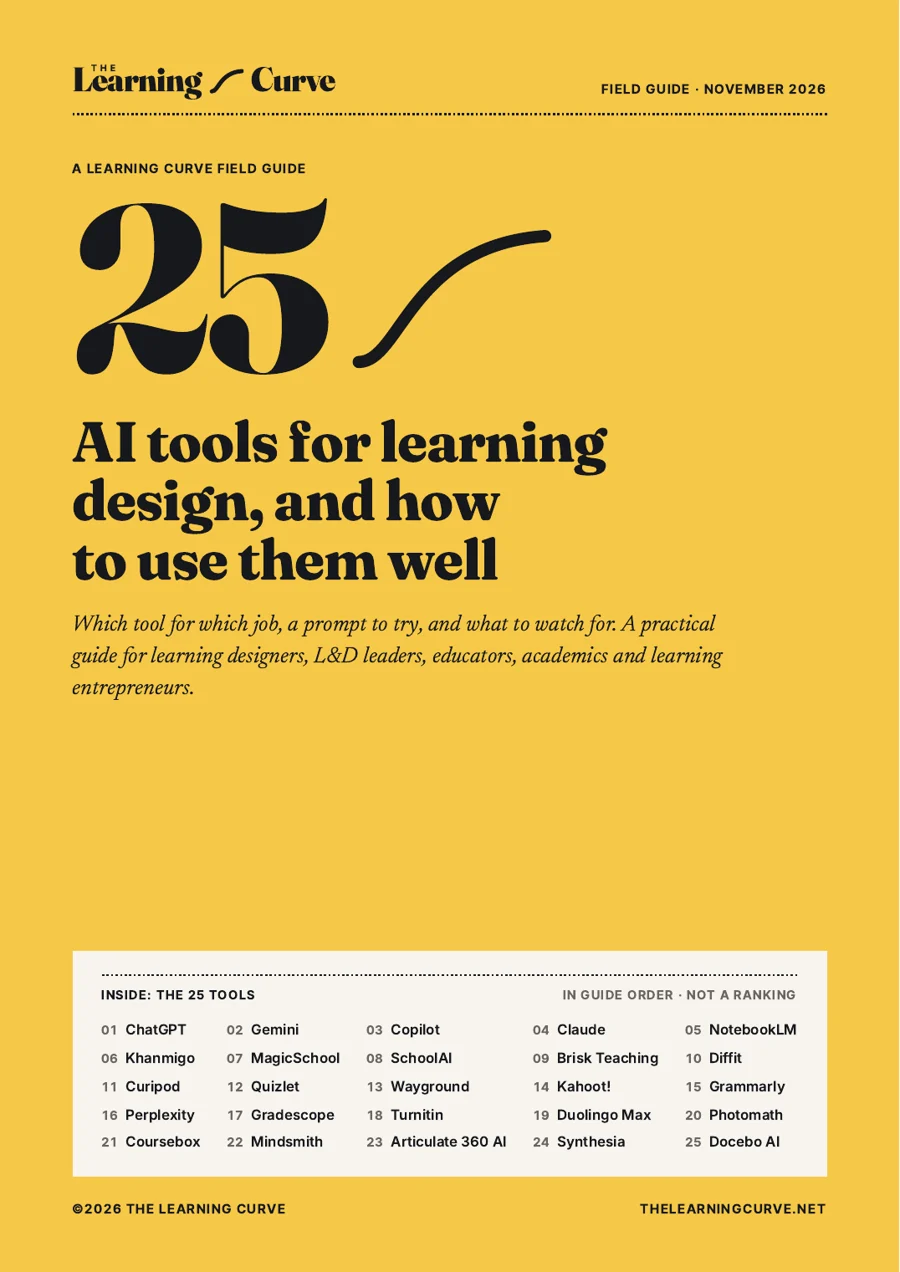
25 AI tools for learning design, and how to use them well
Which tool for which job, a prompt to try for each, five role starting kits and a buying checklist.

Microlearning / Microlearning: Why Two-Minute Videos Miss the Point
Short isn't the active ingredient. Only 8% of viewers want instructional videos under three minutes, and the research credits spacing, recall and feedback. Here's what works, and how to build it.

Constructivism / Constructivist Learning Theory: Why Unguided Discovery Falls Short
Across 164 studies, learners left to discover ideas alone did worse than those taught directly. Constructivism describes how people learn; it was never a case for standing back.

Scaffolding / What Is Scaffolding in Education? A Guide for Course Designers
Scaffolding is temporary support that lets learners do a task they can't yet manage alone, adjusted to them and withdrawn as they improve. In a self-paced course, that adjustment has to be designed in.
How we evaluate
Every platform, scored the same way. In the open.
We build a real course on each platform, and score seven criteria from 1 to 5. Learning design counts for more than business tools.
Report · Preview
Online Learning Trends for 2027: Seven Shifts in the Data
Library
All library →The Expertise Reversal Effect: When Help Starts to Hurt
Worked examples, step-by-step narration and tightly guided practice help beginners. The same support can slow down learners who already know the basics, so a good course plans for when to take it away.
Self-Determination Theory: Motivating Learners in Online Courses
Formative Assessment Examples for Self-Paced Online Courses
The Learning Pyramid: Where the Famous Percentages Came From
What Is Elaborative Interrogation? Getting Learners to Explain Why
Are Learning Styles Debunked? What the Research Actually Shows
Microlearning Defined: What It Is and When Short Lessons Work
Characteristics of Effective Feedback: What the Research Says
Dual Coding Theory in Education: Making Visuals and Narration Work

Guides
All guides →How to Pilot an Online Course: eLearning Testing Before Launch
Test a course in rounds, each answering a different question: does it work, is it right, can learners follow it, and can they do the task at the end? Watch a few people closely before you survey many.
How Long Should a Training Video Be? Evidence for Course Builders
Backward Design in Instructional Design: Start With the Assessment
eLearning Script Writing: How to Write Narration That Sounds Human
Instructional Designer Salary: What the Data Actually Shows
Online Course Completion Rates: What the Data Says and What Moves Them
Bloom's Taxonomy Examples: Using It to Design an Online Course
Writing Multiple-Choice Questions That Teach as Well as Test
How to Storyboard an eLearning Module, Screen by Screen

Trends
All trends →Open Badges 3.0 and Verifiable Credentials: What Changed This Term
This term, the groups that shape US learner records started building for portable, verifiable credentials. Open Badges 3.0 is the format; the harder part is still what the badge proves.